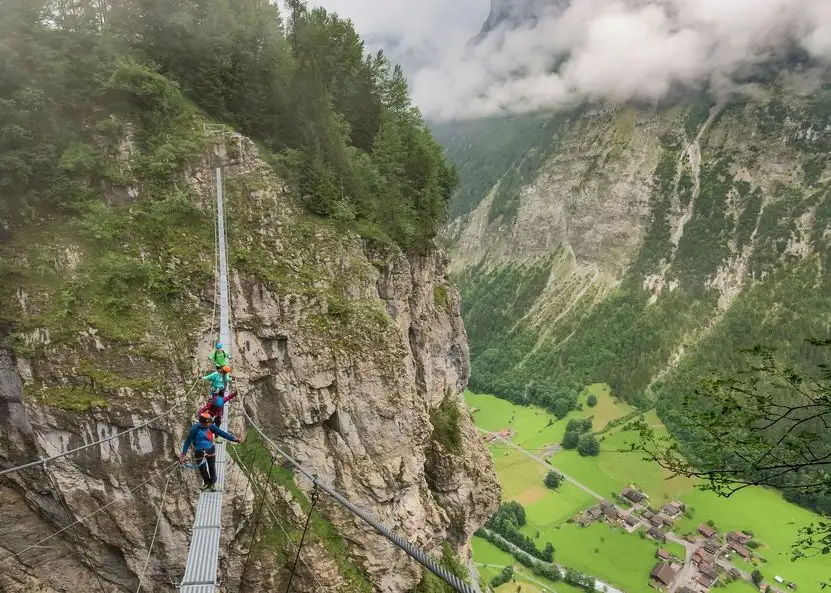
Via ferrata is a mountain activity that involves climbing routes equipped with fixed cables, ladders, bridges, and other aids to assist climbers along exposed and challenging terrain. Proper equipment is essential to ensure safety and comfort during via ferrata climbing.
Stages of Learning on a Via Ferrata
Unconscious Incompetence
At this stage, you don’t know what you don’t know. The risks and techniques are invisible, so mistakes happen without awareness. On a via ferrata, this might look like clipping in carelessly, pulling yourself up with your arms instead of using your legs, or walking past an anchor without realizing the danger. You may underestimate exposure, not recognizing how a small error could have serious consequences.
- Do Recognize that you’re new and seek instruction.
- Do double-check with a partner or guide.
- Don’t clip without checking orientation.
- Don’t rely only on your arms for pulling.
- Don’t ignore exposure or anchor points.
Conscious Incompetence
Now the blinders are off—you start to recognize your limits. You notice your carabiner handling is awkward, your footwork feels unstable, or you freeze when the exposure suddenly feels overwhelming. Mistakes make sense in hindsight: you see why they happened. You can now name missing skills—such as efficient clipping, balance, or weight transfer—and you understand the gap between where you are and where you want to be.
- Do practice smooth carabiner handling at every anchor.
- Do pause to focus on foot placement before pulling.
- Do name the skills you’re working on (balance, clipping, breathing under exposure).
- Don’t rush when nervous.
- Don’ Pretend you’re more skilled than you are—acknowledge gaps.
Conscious Competence
The basics are in place, but they require focus. You climb deliberately: placing feet precisely, moving weight smoothly, clipping with care. Traverses and vertical ladders are manageable if you keep your attention sharp. Every step is intentional. But if you rush, forget a check, or lose focus, errors creep back in. Success at this stage depends on discipline and concentration.
- Do move deliberately: foot, weight transfer, clip—repeat.
- Do keep a rhythm: “feet first, then hands, then clip.”
- Do perform safety checks at rests.
- Don’t let concentration drift during easy sections.
- Don’t skip anchors or safety checks to save time.
Unconscious Competence
With enough repetition, the skills settle into your muscle memory. Clipping is automatic, your body naturally shifts weight onto your legs, and you instinctively scan for the next solid foothold. You move fluidly across ladders, traverses, and vertical walls, adapting smoothly to changes in terrain. At this stage, you not only climb confidently but can also mentor others—spotting mistakes, giving tips, and modeling safe, efficient movement.
- Do trust your legs—hands are for balance, not hauling.
- Do anticipate moves before they happen.
- Do share your knowledge with beginners.
- Don’t switch off completely—complacency is dangerous.
- Don’t forget that others may still be in earlier stages.
Essential equipment for via ferrata
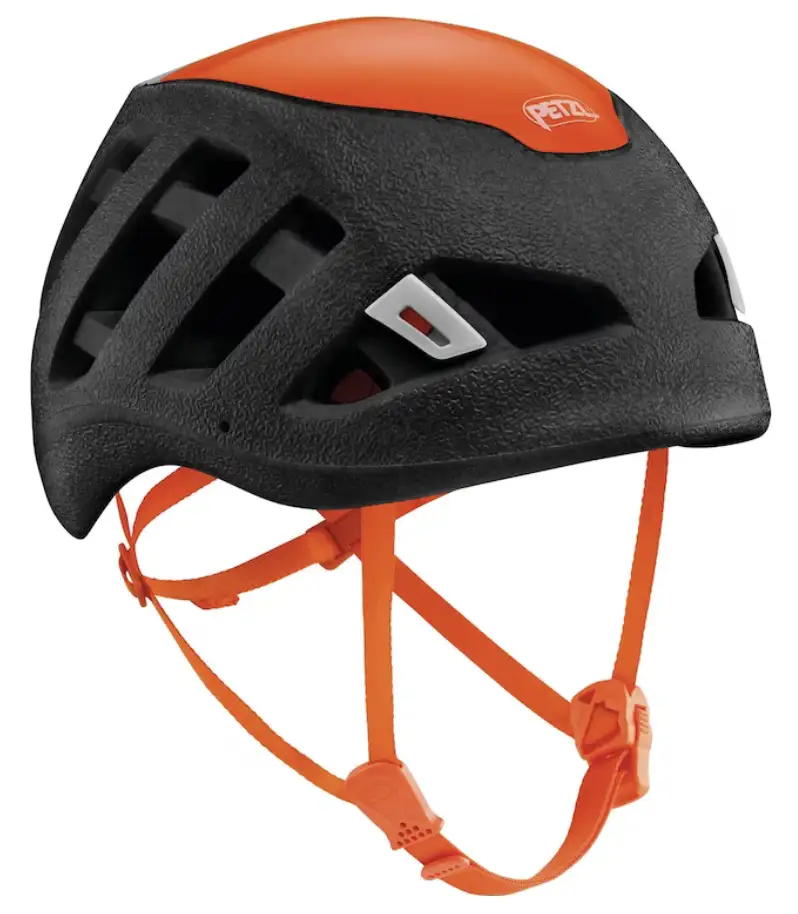
Helmet
A climbing helmet is crucial to protect your head from falling rocks, debris, and potential impacts.
You head has no price tag, so invest in a good one, and always wear it!
Perfect protection and minimal weight. The Petzl Sirocco is the ideal partner for ambitious climbers looking for an ultra-light helmet that still protects the head well. Increased protection is ensured by the deeper design in the neck area, while the excellent ventilation ensures maximum comfort. The hybrid construction consists of a helmet shell made of EPP foam (expanded polypropylene) and a hard outer shell with injected EPS foam (expanded polystyrene). Weight: 170 g. Test mark: UIAA 106. visor/screen: without. Compatible with Vizion face shield. Intended use: climbing.
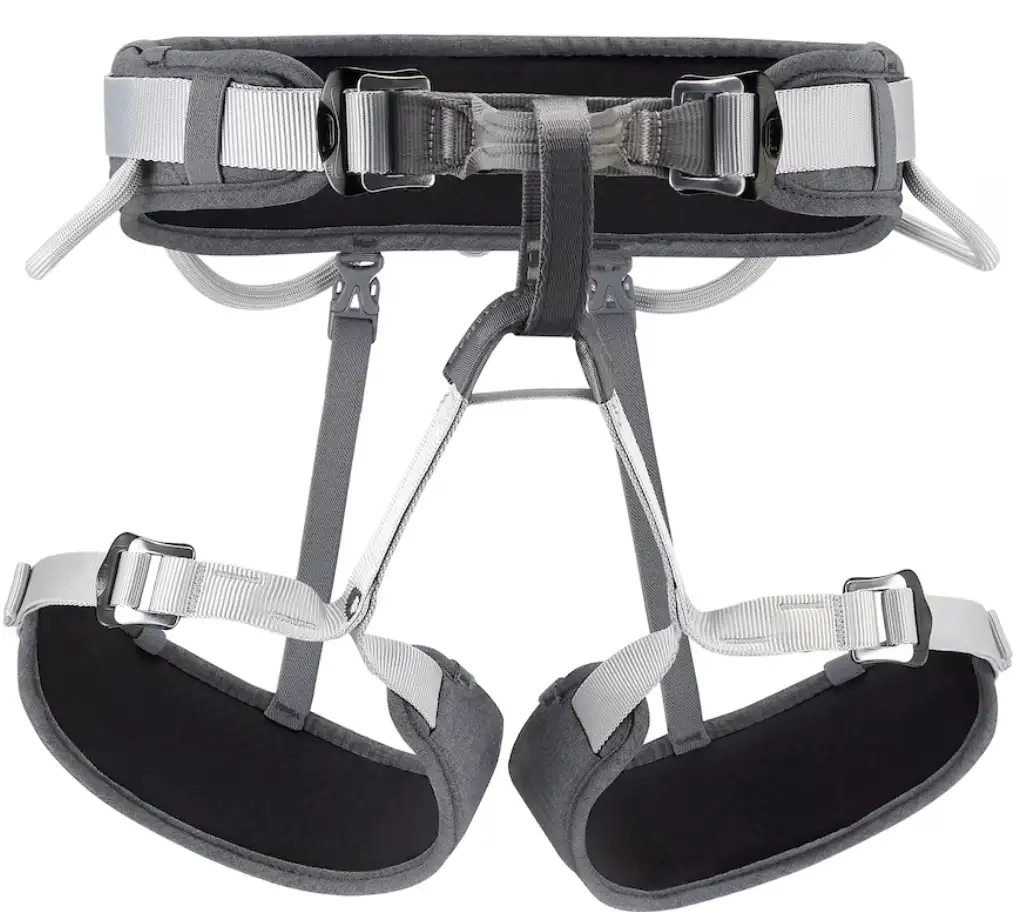
Harness
A climbing harness should be comfortable, adjustable, and have designated attachment points for securing yourself to the via ferrata cable using lanyards or energy-absorbing devices.
Ex: Petzl Corax
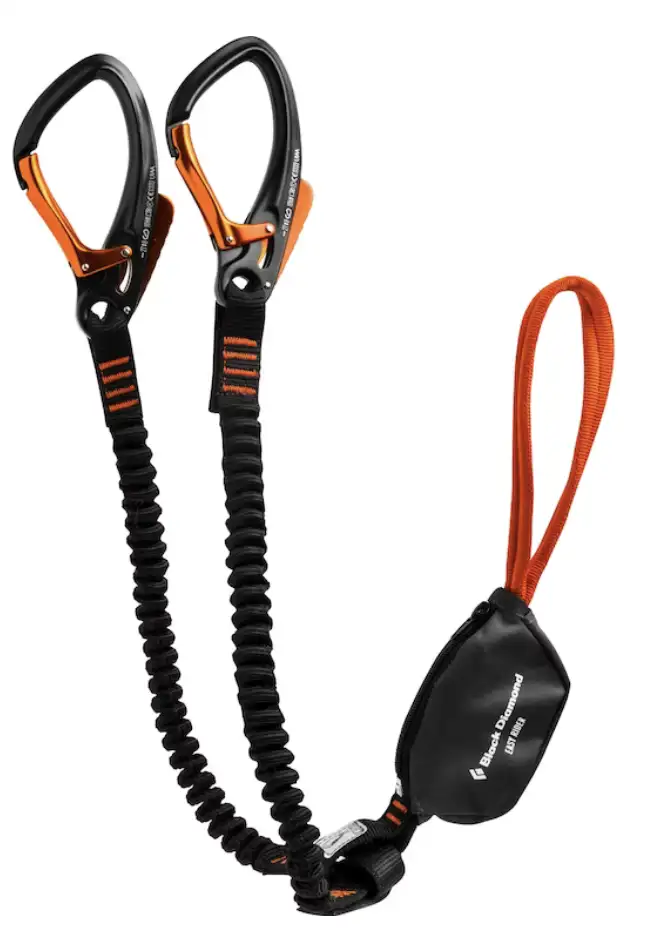
**Lanyards or Energy Absorbers: These are used to attach yourself to the via ferrata cable. Energy-absorbing lanyards are designed to reduce the impact force in the event of a fall.
ex: Black Diamond Easy Rider Via Ferrata
The new Black Diamond Easy Rider Via Ferrata set is easy to clip and features an innovative carabiner with lock/unlock mechanism. This detail allows efficiency and style on the via ferrata. Two Easy Rider carabiners are equipped with an internal locking mechanism with push/clamp activation for easy operation with one hand. The sling, which is attached directly to the climbing harness, is designed for users weighing between 40 and 120 kg according to the EN 958: 2017 standard.
An adjustable safety line
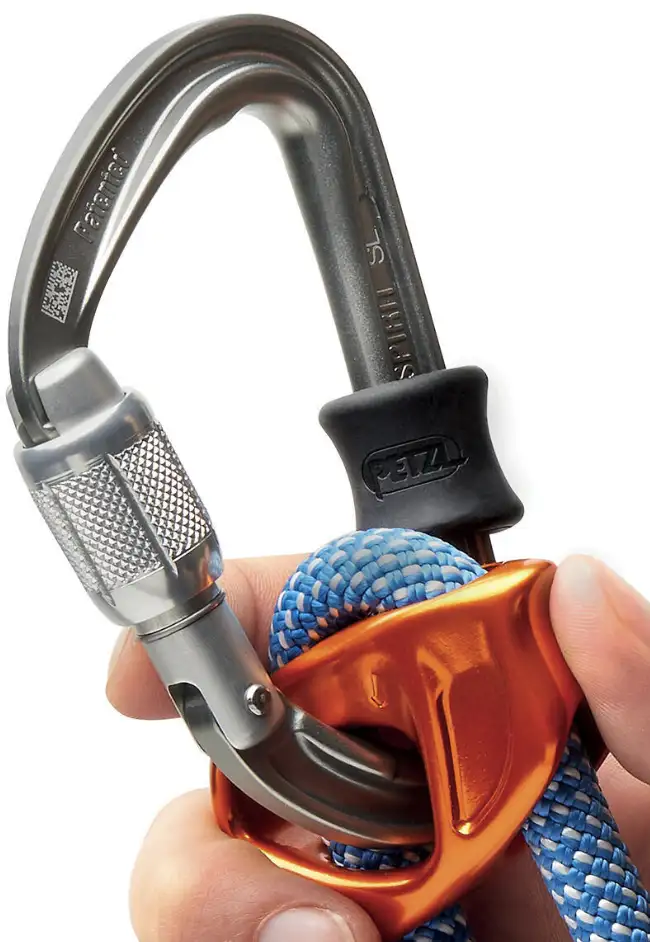
Designed for climbing and mountaineering, CONNECT ADJUST is a single positioning lanyard that allows users to tether themselves to an anchor. The adjustable arm allows the length to be adapted for easier handling. With an ergonomic shape, the ADJUST rope adjuster allows simple and quick one-handed length selection of the adjustable arm.
Ex: Petzl Connect Adjust
OR A fixed safety line
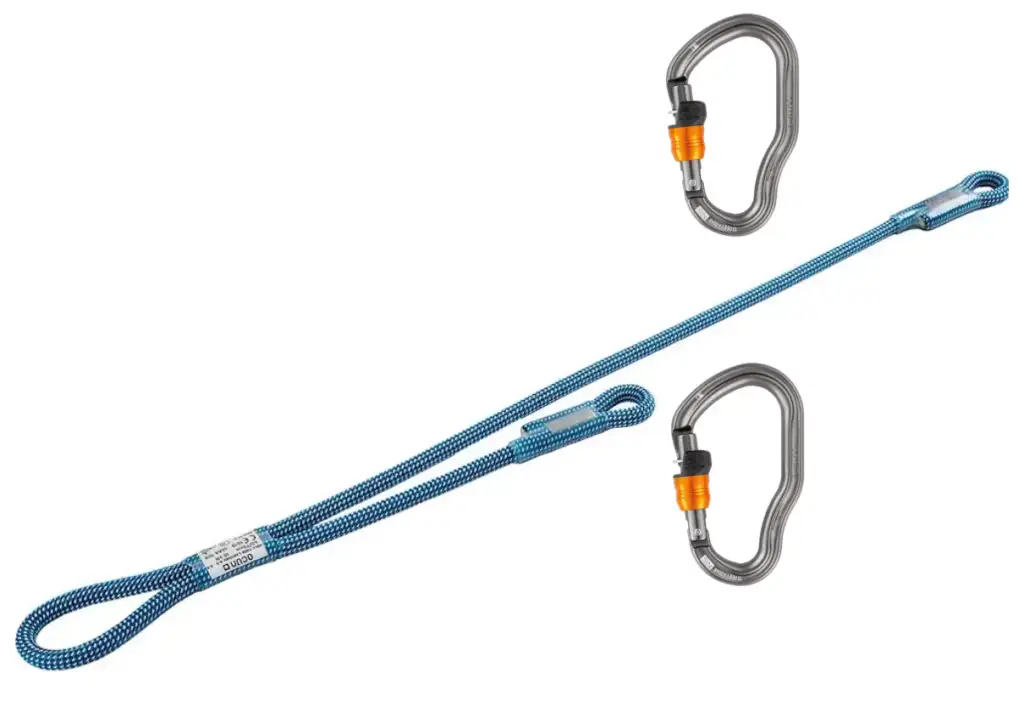
A fixed safety line in Y (2 different length of rope)
1 safety line in Y
2 Petzl Vertigo Wire-Lock or any cheaper one
Climbing Gloves
Sturdy gloves protect your hands from abrasions and enhance grip when handling the via ferrata equipment, cables, and metal fixtures. ## Appropriate Footwear: Sturdy hiking boots or approach shoes with good traction are essential to provide grip on rocky terrain and for stepping on rungs and footholds.
Clothing
Wear comfortable and weather-appropriate clothing. Consider lightweight, moisture-wicking layers that allow for freedom of movement. Depending on the climate and conditions, you may need a windproof or waterproof jacket as well.
Backpack
A small backpack can carry essentials such as water, snacks, a first aid kit, and any extra layers of clothing.
Sunglasses and Sunscreen
Protect your eyes and skin from the sun’s rays, as via ferrata routes can often be exposed to direct sunlight.
Navigation and Safety Equipment
Depending on the route and location, you may need a map, compass, or GPS device. Additionally, a whistle, a small flashlight, and a multi-tool can be useful.
Personal First Aid Kit
Carry a basic first aid kit for minor injuries.
Water and Snacks
Stay hydrated and bring energy-boosting snacks to maintain your energy levels. ##
Buying a Via Ferrata Set
This specialized set usually includes two lanyards with carabiners, designed specifically for via ferrata climbing. Some sets also incorporate an energy-absorbing element. Remember that the equipment you choose should be suited to your level of experience, the difficulty of the route, and the specific conditions of the via ferrata. Before embarking on a via ferrata climb, it’s essential to have proper training, know how to use the equipment correctly, and follow safety guidelines. If you’re new to via ferrata, consider going with a certified guide who can provide instruction and ensure your safety throughout the climb.
Whistles, Frontal lamp
Additional gear to increase safety or get help. I even like to carry a green laser for SOS.
Finding a group or buddy
- https://mountain4life.ch
- https://www.kletterportal.ch
- Look for a local SAC club
- Seek a buddy in a nearby climbing hall. There‘s always like a „black board“ where people look for climbing partners
- In Boulderlounge Schlieren
Ten Guidelines for Via Ferrata Climbers
Prior to embarking on your journey, stay informed about the weather forecast. If the possibility of thunderstorms looms, initiate your climb as early as feasible. In uncertain conditions, it’s advisable to delay the excursion.
Tailor your tour plans to your individual capabilities and physical condition. Reserve the more challenging via ferratas for a later time, avoiding them during the spring initiation.
Pack your backpack meticulously, ensuring no essentials are overlooked. Remember, your equipment is not only meant to be carried but actively used. While stashing your rockfall helmet might shield your valuable camera, it won’t safeguard your head!
Ascend the via ferrata diligently, whenever possible utilizing natural footholds and grips. The steel cable serves primarily as a safety precaution. Ensure that a given rope section is occupied by a single climber at any given time to prevent the risk of being pulled along in case of a fall.
Tread with care, minimizing the potential for dislodging rocks. Whenever feasible, enter ravines and gorges only when unoccupied, meaning no other climbers are currently navigating them.
Maintain unwavering attention to the weather conditions. During thunderstorms, steer clear of ridge lines and metal components—after all, who wishes to amble beside a substantial lightning conductor?
Make the decision to retreat promptly if the weather takes a turn. Even moderately challenging via ferratas can swiftly transform into hazardous predicaments when precipitation, snowfall, or dropping temperatures occur.
Exercise prudence and don’t put absolute trust in wire ropes, hooks, and anchors; they could be compromised or loose. Avoid placing undue strain on the wire ropes unnecessarily.
Whenever you encounter faulty safety devices, promptly report them at the hut or upon returning to the valley (to the police or tourist office)!
Via ferrata difficulty
Via ferratas receive ratings similar to those of climbing routes, spanning from easy to extremely demanding. This categorization serves the purpose of facilitating an easier assessment of a via ferrata’s difficulty level. Unlike climbing routes, where the rating is typically based solely on the most challenging segment, evaluating a via ferrata considers multiple factors: the landscape, protective measures, length, ascent and descent, and the critical juncture. Following the Swiss standard (K 1 – K 6) established by Eugen E. Hüsler, This scale comprises six levels, encompassing the spectrum from ‘easy’ (K 1) to ‘extremely difficult’ (K 6).
K 1 (easy)
Although not a mere hiking trail, this category entails a route that’s usually well-marked, with safety apparatuses suitably accommodating the terrain. Natural footholds are abundant; in their absence, they are supplemented by bridges. Replaced by brief ladders and iron fixtures. Exposed sections feature continuous rope or chain safety mechanisms (also rope railings) throughout the route. For seasoned mountaineers, independent securing is typically unnecessary.
K 2 (moderate)
In certain segments, you begin traversing steeper rocky landscapes; however, the paths are diligently fortified. Ascent through steep stretches is eased by ladders and/or iron supports. Even in less challenging zones, wire ropes and chains ensure security for via ferrata climbers. Those experienced are also recommended to practice self-belay.
K 3 (fairly challenging)
The course alternates between moderate and steep, with instances of exposed rocky terrain incorporating vertical passages. Adequate securing is established, obviating the need for substantial physical exertion. A degree of self-assurance is required. K 4 (challenging) The trail leads through steep rocky terrain with vertical sections and occasional minor overhangs, often coupled with substantial exposure. “Artistic” elements such as rope bridges and segments demanding strong arm strength are encountered.
Starting from K 4
The assessment increasingly factors in the interplay of courage and fear.
K 5 (highly challenging)
Via ferrata tackles extremely exposed rocky landscapes, frequently lengthy and thus exceptionally demanding. Progression involves vertical to slightly overhanging or pushing sections, occasionally incorporating lofty rope bridges. Suitable solely for adept climbers in peak physical condition.
K 6 (exceedingly challenging)
This tier encompasses the select few ‘hair-raising’ routes: via ferratas designed for the most accomplished practitioners equipped with robust upper body strength and unwavering nerves. The paths traverse very steep to overhanging rocky terrains, demanding remarkable stamina. Often outfitted solely with a continuous wire rope. Climbing shoes (friction) might confer advantages.
Dangers of Via Ferrata
Via Ferrata can pose dangers due to several factors inherent to their nature and the environment they are situated in:
Exposure
Many Via Ferrata routes are situated on steep cliffs and mountainsides, leading to exposure to heights and precipitous drops. This can trigger fear or discomfort for some individuals, potentially leading to accidents.
Fall Hazards
While Via Ferrata routes provide safety features like steel cables, ladders, and iron rungs, there’s still a risk of slipping or tripping. If a climber were to lose their balance, they could fall, even if attached to the safety cable.
Equipment Failure
Climbers rely on harnesses, carabiners, and other safety equipment. If any of these components fail due to manufacturing defects or misuse, it can result in a dangerous situation.
Inexperience
Inexperienced climbers might not understand how to properly use the equipment, secure themselves to the cables, or navigate challenging sections. Lack of experience can lead to accidents.
Weather
Weather conditions can change rapidly in mountainous areas. Thunderstorms, heavy rainfall, or sudden temperature drops can increase risks, including the potential for hypothermia or lightning strikes.
Physical Fitness
Via Ferrata routes can be physically demanding, requiring strength, endurance, and agility. Climbers who are not adequately prepared might struggle to complete the route or may become fatigued, increasing the risk of accidents.
Lack of Maintenance
Some Via Ferrata routes might not be regularly inspected or maintained, leading to deteriorating equipment or unclear paths.
Rockfalls
The very nature of mountainous terrain means that rockfalls and loose debris can occur. Climbers could inadvertently dislodge rocks or debris, posing a threat to themselves or others below.
Overconfidence
People with some climbing experience might underestimate the challenges of a particular Via Ferrata route due to its fixed safety elements. This overconfidence can lead to risky behaviors.
Crowding
During peak climbing seasons, popular Via Ferrata routes can become crowded. Overcrowding can slow down climbers, increasing the time spent on the route and potentially leading to frustration or unsafe maneuvers.
To mitigate these risks, climbers should be well-prepared, have a good understanding of their own abilities, follow safety guidelines and instructions, and use appropriate gear. Training, understanding the route’s difficulty level, and being aware of weather forecasts are all important aspects of safe Via Ferrata climbing.
Lighting and weather
Lightning poses a significant danger on Via Ferrata routes due to the following reasons:
Elevation
Many Via Ferrata routes are situated on mountainsides and exposed ridges, placing climbers at a higher elevation where lightning is more likely to strike.
Metal Components
Via Ferrata routes are equipped with steel cables, iron rungs, and other metal components that can conduct electricity. If lightning strikes a metal part of the route, it can travel through the cables and pose a risk to climbers.
Tall and Isolated Structures
Climbers are often exposed on open terrain or near tall rock formations. These features can attract lightning strikes, making them vulnerable during a thunderstorm.
No Shelter
Unlike indoor climbing facilities or traditional climbing areas with rock overhangs, Via Ferrata routes typically lack shelters that could protect climbers from lightning.
Limited Escape Routes
Once a climber is on a Via Ferrata, they might not have immediate access to safe shelters or quick escape routes, making it challenging to find a safe place during a thunderstorm.
Unpredictable Weather
Mountainous regions are notorious for rapidly changing weather conditions. A clear day can quickly turn stormy, catching climbers off-guard.
Risk of Indirect Strikes
Lightning doesn’t always strike directly. A nearby lightning strike can induce electrical currents in the ground or surrounding objects, potentially affecting climbers even if the lightning doesn’t strike the route itself.
Increased Risk on Metal Structures
If climbers are attached to metal cables or using metal equipment during a thunderstorm, they can become part of a conductive path for lightning, increasing the likelihood of injury.
Given these dangers, it’s crucial for climbers to take lightning safety seriously when on a Via Ferrata:
Check Weather Forecasts
Before starting a climb, check the weather forecast for the area. If thunderstorms are predicted, it’s advisable to postpone the climb to a safer time.
Plan Early Starts
Begin your Via Ferrata early in the day to complete the route before afternoon thunderstorms commonly develop in some mountainous regions.
Stay Informed
Be aware of signs of approaching storms, such as darkening skies, distant thunder, and changes in wind patterns.
Turn Back
If you’re on a route and notice signs of a thunderstorm approaching, turn back immediately to lower elevations and seek shelter.
Avoid High Points
During a thunderstorm, avoid high points, exposed ridges, and the top of the route where lightning is more likely to strike.
Descend Quickly
If you’re caught on the route during a thunderstorm, descend as quickly and safely as possible to reduce your exposure to lightning.
Remember that lightning safety is paramount, and it’s always better to prioritize your well-being and seek shelter rather than risking exposure to a lightning strike.
Alpine emergency signal
In an emergency, help can be summoned with this signal: six acoustic or optical signals per minute. Answer: three signals per minute.
Every hiker or mountaineer
who hears the «Alpine emergency signal» is obliged to provide assistance as far as possible. If the mountain rescue service has to be alerted at the hut or in the valley, precise informations is of the utmost importance:
- What happened (type of accident, number of people injured, any type of injury)?
- Where did it happen (exact location, possibly coordinates on the map)?
- When was the accident (time of the accident)?
- What is the situation like at the scene of the accident? (weather, terrain, visibility)?
- Who makes the report (personal details)?
Rappelling (abseiling) on a via ferrata?
Rappelling (abseiling) on a via ferrata is generally discouraged and rarely necessary because via ferratas are designed for upward or horizontal progress using the fixed cables, ladders, and steps. However, there are certain emergency or special-case scenarios where rappelling might become necessary.
Emergency Evacuation (Injury or Exhaustion)
Retreat is safer than continuing, and there’s no escape route except down.
- A climber is injured and cannot continue.
- A team member is too exhausted or psychologically overwhelmed to proceed.
- Weather has suddenly turned dangerous (e.g., lightning storm, snow, or high winds), making forward movement unsafe.
Route Blockage or Collapse
Forward progress is impossible or unsafe.
- A part of the via ferrata is damaged (e.g., rockfall destroyed a ladder or cable).
- A section is blocked by debris, snow, or ice.
- There’s a technical problem with the installation or maintenance of the via ferrata.
Missed Escape Route
You’ve gone too far and now can’t backtrack easily or safely.
- Many via ferratas have designated “escape routes” — side trails or down-climb options.
- If these are missed or inaccessible, the only way out might be rappelling.
Wrong Route / Off-Route
To safely retreat to the correct route or ground.
- Accidentally veering off the marked route onto a much more difficult or dangerous section.
- Getting stuck in a spot that’s too hard to ascend or descend without proper additional gear.
Soloing or Unsupported Climbing
It’s part of their planned contingency, not a standard part of via ferrata usage. In rare cases, experienced * * * * climbers doing solo or exploratory routes may need to rappel due to lack of support or safe continuance.
Nightfall or Time Constraints
To shorten descent time and reach safety.
- If caught out too late and can’t finish the route before dark.
- If descent via hiking path is no longer viable due to time or risk.
Practice or Training (Rare but Possible): Some guides or rescue teams might use via ferrata terrain for rescue training, which could involve rappelling.
Zip Line
Carrying a rope may be useful to rescue someone stuck on a zip line.
Zip line / tyroliennes
Equipment
- Petzl speed pulley (only one that work on metallic zipline)
- 4 carabiners in oval shape, PETZL OK for example
- 2 express sling for added safety
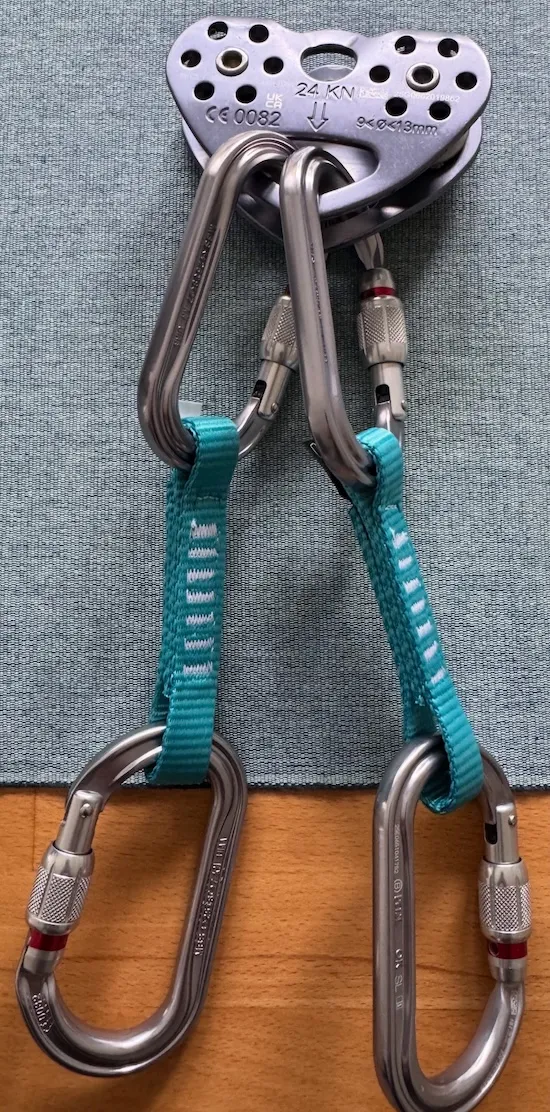
rescue stuck person
self rescue
Knots
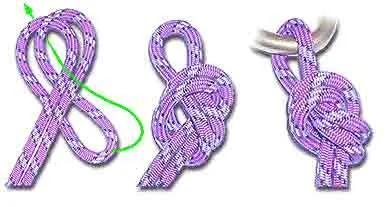
Nœud « queue de vache »
Le nœud « queue de vache » (aussi appelé nœud de plein poing ou double overhand knot en anglais) est un nœud très simple et polyvalent.
- Sert souvent de nœud d’arrêt en bout de corde (pour éviter qu’elle ne glisse dans un dispositif ou un trou).
- Utilisé comme nœud de sécurité derrière un autre nœud (par exemple derrière un nœud de huit).
- Peut servir en escalade, spéléologie, voile ou pêche.
- On peut aussi l’utiliser pour créer une butée ou pour alourdir une extrémité de corde.
- Relié au baudrier de l’assureur il est utilisé pour prévenir une moulinette éventuellement trop courte,
- On peut éventuellement l’utiliser au relais sur le deuxième point.
Il n’est jamais utilisé comme noeud d’assurage car difficile à défaire après avoir été mis sous tension.
Belay loop or not?
https://www.alpinesavvy.com/blog/how-to-best-connect-a-tether-to-your-harness?rq=via%20ferrata
Interesting blogs
Interesting YOUTUBE
- https://www.youtube.com/@ViaFerrataHelvetica
- https://www.youtube.com/@JetSetYourself/
- https://www.youtube.com/@carlseye
- https://www.youtube.com/@TraintoSummit/
- https://www.youtube.com/@alpinrock1288/videos
- https://www.youtube.com/@AvventureDolomitiche/videos
- https://www.youtube.com/@b2attravel/videos
- https://www.youtube.com/@Berg_auf/videos
- https://www.youtube.com/@BrunoPisaniAdventure
- https://www.youtube.com/@tourferrateita6015/videos
- https://www.youtube.com/@viasferratasespana-toprutas
- https://www.youtube.com/@topojavi1
Interesting Instagram
Links
Via ferrata in Switzerland http://www.myswitzerland.com/en/via-ferrata-in-switzerland.html Descriptions and photos of many of the via ferrata in Switzerland on the website of Switzerland Tourism.
de Andar http://deandar.com/ferratas/ A well-designed and useful Spanish language website that provides information on via ferrata across Europe. There is an interactive map marking each via ferrata as well as route descriptions, photographic topos, photos, local maps, and some videos.
via-ferrata.de http://www.via-ferrata.de/ A German language website that provides descriptions and photos of via ferrata across Europe. It also has via ferrata news, technical advice, articles, useful links and information on equipment.
Ferrata Guide https://ferrataguide.com/ A website with descriptions, topos, photos, and maps of via ferrata around the world. There are also user comments on the via ferratas.
Klettersteig.com http://www.klettersteig.org/ An Austrian website that provides brief descriptions and photos of via ferrata in Austria, Germany, Italy and Switzerland. The majority of the website is in German, but the introductory pages (including an explanation of one system of via ferrata grading) is in English.
bergsteigen.com https://www.bergsteigen.com/touren/klettersteig/ A nicely set out, German-language website that provides route descriptions, maps and topos for via ferratas in Austria, Switzerland and Italy.
6 of the Best Via Ferrata in Europe https://www.muchbetteradventures.com/magazine/6-awesome-via-ferrata-in-europe/ An article on some of the best via ferrata around Europe.
The Ultimate Guide to Via Ferrata in the UK https://www.base-mag.com/the-ultimate-guide-to-via-ferrata-in-the-uk/ An overview of the via ferrata in England, Scotland and Wales.
Via Ferrata – Protected Climbing Paths in the Dolomites http://alavigne.net/Outdoors/FeatureReports/ViaFerrata/ A website that provides route descriptions and photographs of many via ferrata in the Italian Dolomites. An interactive via ferrata map on the site is a useful tool for planning a trip, while routes are also listed by mountain group and name.
8 Via Ferratas You Wouldn’t Want to Fall From https://www.redbull.com/gb-en/8-high-wire-via-ferratas-to-give-you-vertigo An article from Red Bull about a selection of via ferrata from around the world.
Planet Mountain – Via Ferrata http://www.planetmountain.com/english/trekking/ferrate/itineraries/home.php A brilliant website that provides very detailed and clear route descriptions of via ferrata in the Italian Dolomites. A search function allows you to look for via ferrata by mountain group and name. Route descriptions can also be downloaded as pdf files so you can print them off and take them on the mountain with you. The Planet Mountain site is available in both English and Italian and contains lots of other information on mountain activities.
Climbing in South Tyrol https://www.suedtirol.info/en/en/experiences-and-events/sports-activities/rock-climbing The tourist authority of South Tyrol provides description of via ferrata in their region on this website. The summaries of the via ferrata are short, but each helpfully includes a topographical map showing the route together with an altitude profile of the route.
Viaferrata-FR http://viaferratafr.free.fr/ A French language website that provide short descriptions of French via ferrata and articles on such things as via ferrata safety.
Take a Leap of Faith https://localfreshies.com/take-a-leap-of-faith-and-try-the-best-via-ferrata-in-north-america/ An article on the best via ferrata in the USA and Canada.
Ecrins & Briancon Via Ferrata app A free app that provides information on via ferrata in the Ecrins and Briancon area of the Haute Alps in France. It includes topos, route maps, photos, mapping, access information and descriptions of the routes. It’s available from the Apple App Store and Google Play. https://itunes.apple.com/gb/app/ écrins-briançon-via-ferrata/id1348658640?mt=8 and https://play.google.com/store/apps/details?id=com.skiroute16.viaferrata.ecrins.braincon
Norway’s Awesome Via Ferratas https://www.visitnorway.com/things-to-do/outdoor-activities/via-ferrata/ This website from Visit Norway describes via ferrata across the country. Scrolling down takes you through videos and photos of each via ferrata, with links to further information. At the bottom of the first page is a map with links to the descriptions of each route.