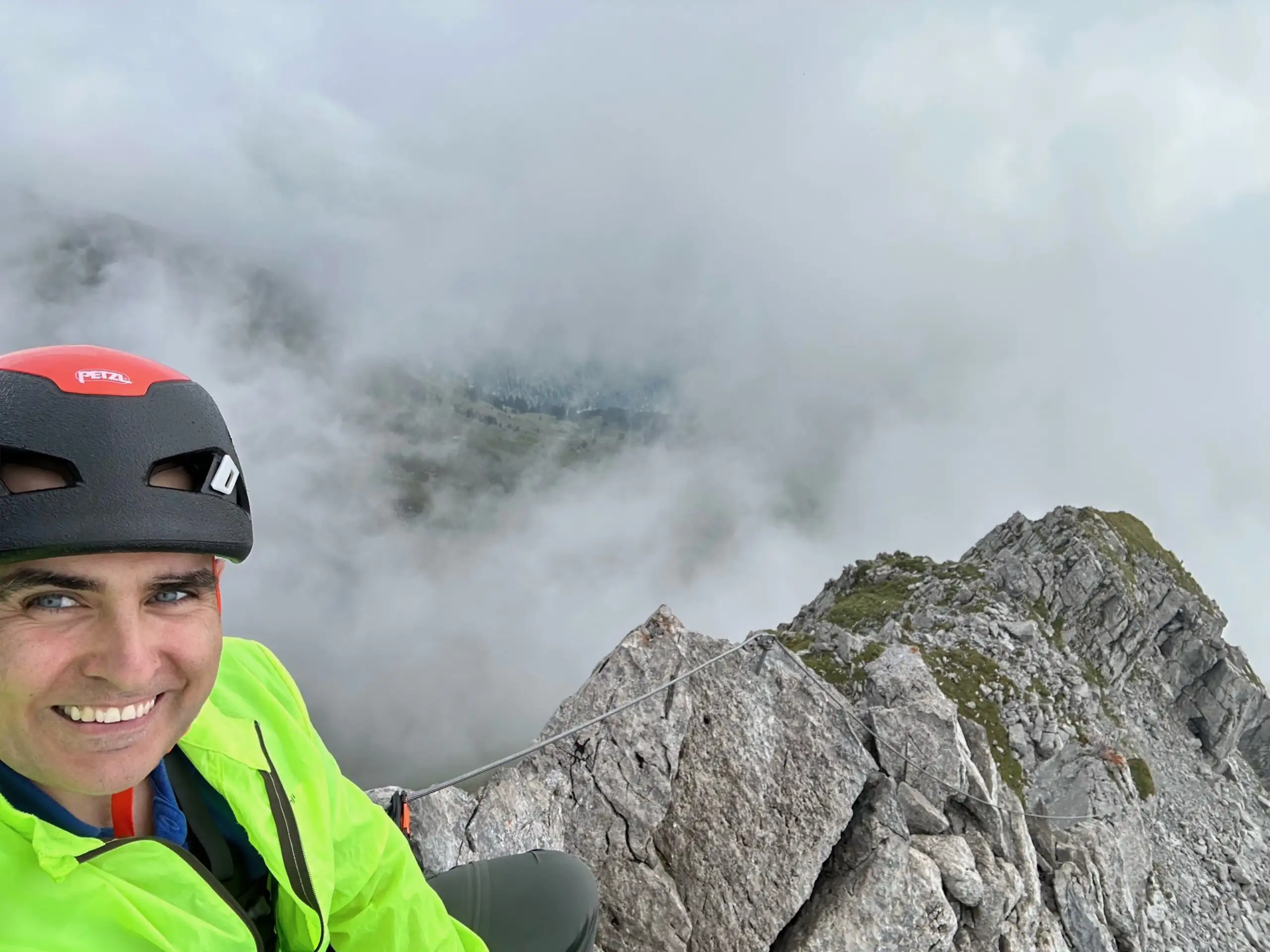
Via ferrata («iron path» in Italian) allows climbers to explore vertical and exposed alpine terrain with the aid of fixed steel cables, ladders, and rungs. While it’s safer than traditional rock climbing, it’s not risk-free. Rockfall, weather changes, fatigue, or even equipment failure can turn a fun day into a dangerous situation.
Knowing self-rescue techniques is essential for via ferrata enthusiasts—especially when you’re far from professional help or cell signal. In this post, we’ll cover realistic scenarios and step-by-step self-rescue strategies for each, focusing on practical skills, gear management, and risk mitigation.
info
This page will always be a work in progress! You can fork this page on github and propose corrections or add comments there!
Why Rescue Skills Matter
Most via ferrata routes are designed to be accessible, but the consequences of mistakes can still be fatal. Here’s why you should be prepared:
- You may be hours or days from rescue teams
- You may be climbing solo or with inexperienced partners
- Injuries and exhaustion can make retreating or continuing dangerous
- Weather can deteriorate suddenly, increasing risk of hypothermia or lightning strikes
What you should learn
Go to training courses, which provide a solid base and help you expand your competences and improve your technique with qualified instructors.
- How to set up a rappel and different ways to perform it (with one or two ropes, single or double).
- Self-belay rappelling and management of zip lines and exposed sections.
- How to belay a partner on vertical sections, both ascending and descending.
- Basic rescue of a person on a vertical wall and techniques to handle minor emergencies.
- Essential and optional equipment for via ferratas, plus recommendations on what to purchase.
- Practical tips and tricks that guides use when managing a via ferrata or a rappel.
- Self-rescue: How to get yourself out of a difficult situation, such as a crevasse, or how to manage a fall.
- Companion rescue: Techniques for rescuing an injured partner, including proper rigging, ascending a rope, and removing intermediate anchor points.
- High-angle rescue: Advanced techniques for complicated rescue scenarios, often including the use of Artificial High Directionals (AHDs) and a mix of winches and mechanical advantage systems.
- Rigging and anchor systems: Learning to build strong and reliable anchor points using specific knots and equipment. Emergency response: How to assess a situation, prevent further danger, and manage a rescue from start to finish.
Must-Have Emergency Gear for Via Ferrata
| Item | Use Case |
|---|---|
| Prusik loop or cord | Backup rappel or ascending |
| 120 cm sling | Improvised anchor, rest aid |
| Locking carabiners (x2) | Anchors, belaying, backups |
| Small rope (30m min) | Emergency descent or belay aid |
| Knife/multitool | Cutting rope or gear adjustment |
| First aid kit | Treat scrapes, sprains, or wounds |
| Headlamp | Visibility if delayed or nightfall, Emergency signaling |
| Whistle | Emergency signaling |
| Emergency blanket/bivy | Hypothermia prevention |
| Enough water or Filtering system (less weight but water source needed) | Dehydratation prevention |
| Enough to eat | For up to 2 days. |
Essential Knots for Via Ferrata
| Knot | Primary Use | Why It’s Important |
|---|---|---|
| Figure-Eight Knot (on a bight) | Creating a secure loop in the rope or sling | Easy to tie and untie, even after loading; great for attaching to anchors. |
| Clove Hitch | Quick attachment to carabiners or anchor points | Adjustable and fast to tie one-handed—perfect for temporary anchoring. |
| Girth Hitch (Lark’s Foot) | Attaching slings or Prusik loops to harness or gear | Commonly used to connect slings or cords securely. |
| Double Fisherman’s Knot | Joining two ropes or closing a loop of cord (e.g., for Prusik) | Very secure, ideal for making your own Prusik loops. |
| Prusik Knot | Ascending or backing up a rope (self-rescue) | Friction hitch that grips under load and slides when released. |
| Munter Hitch (Italian Hitch) | Emergency belay or rappel control (with locking carabiner) | Enables controlled lowering or belaying without a belay device. |
| Overhand Knot (Stopper Knot) | Preventing rope ends from slipping through a device | Simple backup or stopper knot for extra safety. |
Optional but Useful Knots
| Knot | Use |
|---|---|
| Bowline | Creating a fixed loop at rope end (less common for via ferrata but useful for improvised anchors). |
| Klemheist or Autoblock | Alternative friction hitches for ascending or rappelling. |
| Water Knot (Tape Knot) | Joining two flat slings or webbing together. |
see https://knotspedia.com for how to make them
Alpine emergency signal
In an emergency, help can be summoned with this signal: six acoustic or optical signals per minute. Answer: three signals per minute.
Every hiker or mountaineer
Anyone who hears the «Alpine emergency signal» is obliged to provide assistance as far as possible. If the mountain rescue service has to be alerted at the hut or in the valley, precise informations is of the utmost importance:
- What happened (type of accident, number of people injured, any type of injury)?
- Where did it happen (exact location, possibly coordinates on the map)?
- When was the accident (time of the accident)?
- What is the situation like at the scene of the accident? (weather, terrain, visibility)?
- Who makes the report (personal details)?
S.O.S Alerts Alps
- Germany: 112
- Austria: 112 or 140
- France: 112
- Italie: 118
- Switzerland: 144 or 112
You’re Stuck Mid-Route and Can’t Climb Up or Down
You’re halfway up a route and reach a section that’s too difficult or exposed. You freeze, panic, or physically can’t continue.
- Overestimating your ability
- Poor footwear or slippery conditions
- No bypass route available
Self-Rescue Techniques when You’re Stuck Mid-Route and Can’t Climb Up or Down
Step 1: Breathe and Secure Yourself
- Find a resting point or foothold.
- Clip into a rung or anchor using a lanyard with a locking carabiner or cow’s tail to reduce fatigue on your main lanyards.
- Breathe deeply to control panic.
Step 2: Use a Rest Loop or Daisy Chain
- Attach a daisy chain or sling to your harness and the cable or a secure rung.
- Sit into it to rest while planning your next move.
Step 3: Downclimb if Necessary
- If the last section is within your skill level, consider downclimbing carefully.
- Always maintain at least one attachment to the cable.
- Move deliberately; don’t rush.
Step 4: Call for Help (if needed)
- If you cannot proceed or descend, use your phone or emergency beacon.
- Signal with a whistle (3 long blasts = SOS).
- Consider waiting for other climbers—many via ferratas have decent traffic.
Lanyard Slipped or Equipment Malfunction
Your via ferrata lanyard is compromised—one arm fails, a carabiner is jammed, or your harness wasn’t properly secured.
- Low-quality gear
- Improper use or checking
- Sharp edges cutting into gear
Self-Rescue Techniques when Lanyard Slipped or Equipment Malfunction
Step 1: Assess Your Safety
- Are you still attached with at least one lanyard? If yes, don’t move until you’re secured redundantly.
Step 2: Back Yourself Up
- Use a sling, daisy chain, or prusik cord to create an additional attachment to the cable or anchor.
- If you carry a short rope, use a Munter hitch or assisted-braking device for backup.
Step 3: Repair or Replace
- If you can fix the gear safely (e.g., unjam a carabiner), do so.
- If not, consider bypassing the damaged section using slings or a rope to rappel short distances (see scenario 4).
Always carry a small “rescue kit”: 2 locking carabiners, a 120 cm sling, prusik cord, and a multitool.
Your Partner is Injured or Immobilized
Your climbing partner slips and is hanging by their lanyards, unconscious or unable to move.
- Loose rock or slips
- Fatigue or dehydration
- Improper fall technique
Self-Rescue Techniques when Your Partner is Injured or Immobilized
Step 1: Secure Yourself First
- Clip into a solid anchor to free your hands.
Step 2: Assess the Victim
- Are they conscious? Responsive?
- Are they still securely attached?
Step 3: Communicate and Stabilize
- If conscious, help them reorient and rest.
- Use slings or a tether to reduce load on their lanyards if possible.
- Offer water, food, or first aid.
Step 4: Get Help
- Call for emergency services if possible.
- Mark your GPS location.
- If help is not immediately available and the terrain allows, consider helping them down slowly and safely, but do not risk your own safety.
warning
Never try to lower an unconscious climber unless you’re trained in technical rescue—wait for professionals.
Need to Retreat or Rappel Off the Route
A storm is approaching or someone in your group can’t continue. You must exit the via ferrata before completing it.
- Late start
- Weather deterioration
- Route too long or exposed
Self-Rescue Techniques
Step 1: Look for Escape Routes
- Some via ferratas have marked escape trails. Look for signs or GPS info before starting the climb.
Step 2: Set Up a Safe Rappel (if no trail)
What you need:
- A 30-50m rope (twin or half rope recommended)
- Locking carabiners and slings
- A rappel device (ATC or assisted-braking)
- Backup (prusik or auto-block)
Steps:
- Locate a solid anchor (bolt, rung, or tree).
- Build a retrievable anchor or abandon a sling.
- Thread the rope through the anchor (if doubled).
- Tie stopper knots at rope ends.
- Attach rappel device and backup.
- Descend slowly and smoothly, watching for rope snags.
warning
Only rappel if you’re confident in your anchor and technique. Improvised descents can be extremely risky without experience.
Caught in a Thunderstorm or Bad Weather
A storm rolls in and you’re exposed on a metal route—dangerous for lightning and slippery under rain or hail.
Self-Rescue Techniques when being caught in a Thunderstorm or Bad Weather
Step 1: Get Off the Metal
- If lightning is near (count seconds between flash and thunder), move away from the cable if possible.
- Shelter under overhangs or rock features—not near the cable.
Step 2: Wait It Out
- Sit on your backpack or dry clothing to insulate from the ground.
- Avoid large metal structures or high points.
Step 3: Descend After the Storm
- Wet rock is slippery; move cautiously.
- Use gloves for better grip.
- Use slings for temporary rests to reduce strain.
You Fall Off a Suspension Bridge or Hanging Ladder
You slip off a narrow or swaying bridge, and your via ferrata lanyard arrests the fall. You’re now dangling, unable to climb back up easily.
- Poor balance or coordination
- Heavy wind or unstable bridge
- Fatigue or panic
- Slippery wooden planks or cables
Self-Rescue Techniques when you Fall Off a Suspension Bridge or Hanging Ladder
Step 1: Stay Calm and Assess
- You’re likely dangling from your shock-absorbing lanyard, which has done its job.
- Check yourself for injuries. Are you winded or hurt?
- Are both carabiners still clipped to the safety cable?
Step 2: Try to Climb Back Up
- Swing or use your legs to reach the bridge’s cables or supports.
- Grab the side cables or vertical ropes if available and “walk” up them with your feet, like climbing a rope gym class-style.
- If you’re flexible and uninjured, this is usually doable.
Step 3: Use a Sling or Prusik for Aid
- If you can’t climb with body strength alone:
- Pull out a 60–120 cm sling or prusik cord.
- Create a foot loop and step into it.
- Use it to offload your body weight from your lanyard and “stand” up.
- Gain enough height to re-grab the bridge or clip into another section.
Step 4: Ask for Help
- If you’re unable to self-rescue, call for help or wait for your climbing partner to assist from the bridge or platform above.
Video
You’re Stuck in the Middle of a Zip Line (Tyrolean Traverse)
You don’t make it to the far end of the zip line and are now hanging in space, meters from the landing platform—stuck and swinging.
- Not enough momentum (started too slow)
- Crosswinds or friction
- Heavier backpack or poorly aligned pulley
- Using improper gear (e.g., lanyard instead of proper zip pulley)
Self-Rescue Techniques when you’re Stuck in the Middle of a Zip Line (Tyrolean Traverse)
Step 1: Assess and Stay Calm
- You are safe as long as your pulley is attached to the cable, and your lanyards are clipped as backup.
- Don’t panic—you’ve got time and gravity won’t worsen your situation unless gear fails.
Step 2: Try to Pull Yourself to Safety (Hand-Over-Hand)
- Turn to face the direction you need to go.
- Grab the cable and pull hand-over-hand, using your legs to help generate motion.
- Use the momentum to swing slightly toward the end platform and rest periodically if needed.
Step 3: Use a Prusik or Sling to Haul Yourself
If pulling yourself isn’t possible: Use this rope Trick (Improvised Hauling System)
- Take your prusik cord or sling and tie it to the cable in front of your pulley.
- Clip a carabiner to your harness belay loop.
- Use the prusik as a foot loop or hauling grip—step into it or use it to “ratchet” forward along the cable.
- Alternate between pushing the prusik forward and pulling yourself up inch by inch.
Step 4: Partner Pull (If You’re Climbing with Others)
If you have a partner at the far end:
- They can throw a rope or sling to you and pull you in.
- Or they can come out onto the zip line and help drag you in with their momentum and body weight.
What to Carry for Bridge or Zip Line Self-Rescue
| Item | Use Case |
|---|---|
| Prusik cord (5–6mm, 1.5m) | Hauling, ascending zip line |
| 120 cm sling | Foot loop for climbing up from a fall |
| Locking carabiners (x2) | Building temporary attachments |
| Small pulley (rated) | For smoother zip line rides (some via ferratas require your own!) |
| Gloves | Grip while pulling along zip lines |
| Lightweight rope (optional) | Partner pulls or improvised haul |
Final Safety Tips for Bridges and Zip Lines
- Always use a certified via ferrata pulley for zip lines, not your lanyards directly.
- Clip both lanyards as backup when crossing bridges or zipping.
- Practice zip line self-rescue techniques on a controlled line or gym setup before trying real scenarios.
- If you’re unsure whether you’ll make it across a zip line, have someone go first to assist or send a rope back.
Zip Line rescue video
Ascending the Cable After a Fall
If you take a fall and end up dangling below the last rung or anchor, especially on a vertical or overhanging section, you may not be able to climb back up directly.
Self-Rescue Techniques cable Ascending with Prusik and Sling
You’ll use a prusik and a sling or foot loop to ascend the cable slowly.
Gear Needed
- 1x prusik loop (5-6mm cord)
- 1x sling or adjustable foot loop
- 2x locking carabiners
Steps
- Tie the prusik around the cable above your fall point.
- Clip it to your harness with a locking carabiner.
- Add a foot loop sling to the prusik.
- Step into the sling and stand to lift your body.
- Slide your lanyards and/or second prusik higher.
- Repeat: Stand, slide, sit, repeat.
If your lanyard is fully extended or the absorber deployed, the cable may be out of reach. Use a cow’s tail or a short sling to gain the first few centimeters to reach up.
Improvised Belay or Assisted Rescue
Sometimes you’re climbing with someone less experienced or injured, and you need to provide a temporary belay or assist through a tough section.
Self-Rescue Techniques Belay with Munter Hitch (Improvised)
If you’re carrying a short rope or even a long sling, you can create a Munter hitch for a basic belay setup.
Gear Needed
- Rope (20–30m, dynamic preferred)
- Locking carabiner
- Anchor (rung or cable bolt)
Steps
- Clip into a fixed anchor.
- Use the rope and carabiner to create a Munter hitch.
- Belay your partner while they ascend the difficult section.
- You can also lower them using the same setup if needed.
This is NOT as smooth as a real belay device but works in emergencies.
Getting Past a Frozen or Injured Climber Blocking the Cable
If someone is frozen in fear, unconscious, or injured and blocking your route, you may need to bypass them—without compromising your own safety.
Self-Rescue Techniques Cable Bypass Using Slings
Gear Needed
- 2x slings (60–120 cm)
- 2x locking carabiners
Steps
- Clip a sling above the person to a point on the cable or a solid anchor.
- Clip it to your harness as a temporary anchor.
- Unclip your lanyards one at a time and pass them around the climber.
- Reattach above them and check security.
- Climb around or over the person carefully, without dislodging them.
ATTENTION: Always have a third point of attachment while unclipping.
Torn or Used-Up Shock Absorber on Your Lanyard
Via ferrata lanyards have shock absorbers that rip open during a fall to reduce impact. After deployment, the lanyard is no longer safe to use for arresting another fall.
Self-Rescue Techniques replace or Back-Up a Failed Lanyard
If you carry a lanyard backup:
- Use your backup lanyard or a cow’s tail made from a dynamic rope or a Y-shaped climbing sling.
- Avoid static-only materials (like slings or daisy chains) as they can break in a fall.
If you have no lanyard backup:
- Use a prusik or sling to progress along the cable cautiously.
- Stay clipped into both anchors at all times.
- Avoid vertical sections—descend or escape ASAP.
ATTENTION: Treat the rest of the climb as “no-fall territory.” Use extra caution and maintain 3 points of contact.
Mental Self-Rescue: Managing Panic and Freezing
Not all rescues are physical—mental freezing is a common and dangerous problem, especially on exposed sections.
Self-Rescue Techniques grounding and Control
Steps
- Clip into a secure anchor or rung.
- Close your eyes for 10 seconds and take deep, slow breaths (4-4-4 technique: inhale 4, hold 4, exhale 4).
- Reframe: Talk yourself down with facts, e.g., “I’m attached. I can rest. I am not falling.”
- Visualize the next 2-3 moves only—don’t focus on the full climb.
info
Practicing mindfulness and breath control during training can make a huge difference in panic management.
Advanced Emergency Techniques: Lowering a Partner (If You Carry Rope)
If you’re a guide or experienced climber and carry a short rope (20–30m dynamic), here are some next-level rescues:
- Set up a Munter hitch or belay device on a secure anchor.
- Use rope to lower a fatigued or injured climber to a safer ledge. 🔧 Hauling a Stuck Climber (Z-Pulley Light)
- Set up a Z-pulley system using prusiks and carabiners.
- Requires training but can lift someone a few meters if they can’t ascend.
warning
These require practice and understanding of basic climbing rescue systems. Train in controlled environments before relying on them.
Harness Suspension Trauma (Orthostatic Shock) Why It’s Dangerous to Hang Motionless on a Zip Line
When you hang still in a harness, the leg straps compress blood vessels in your thighs. Blood pools in your legs because the muscles aren’t contracting (no movement = no circulation).
After several minutes, your brain and vital organs receive less oxygenated blood. The harness can also compress your diaphragm and pinch nerves around the hips and thighs. This causes numbness, tingling, or pain — and worsens if you panic or breathe shallowly. Prolonged compression may cause temporary nerve damage or loss of leg function.
Symptoms: dizziness, nausea, fainting, rapid breathing, and eventually loss of consciousness.
warning
In severe cases (10–30 min of suspension), this can lead to cardiac arrest and DEATH — even if you weren’t injured before. Never remain hanging motionless for more than a few minutes. If stuck, act immediately.
Magic Sling tips
- You must check them for wear
- Consider them as static, do not load shock them
- Rated at 20kn, they will fail when too old at less than 3kn
Durability taken from Mammut Slings manual
| Frequency of Use | Approximate durability |
|---|---|
| Never Used | 10 years |
| Once or twice a year | Up to 7 years |
| Once a month | Up to 5 years |
| Several times a omth | Up to 3 years |
| Every week | Up to 1 years |
| Almost daily | less than a year |
Emergency 3 carabiner brake rappel
https://www.alpinesavvy.com/blog/a-slick-carabiner-rappel-brake https://www.instagram.com/reel/DOyOQ-MDuMD/?igsh=MWdlYnR1YWZ1Ym1jOA==
Limits of gears
sling vs lanyards
quickdraw
carabiners
knots
falling physics
Conclusions
Via ferrata is a thrilling, accessible way to explore the mountains—but it still demands respect and preparation. Learn your gear, train for the worst-case scenario, and practice self-rescue skills in safe environments. Most importantly: never climb beyond your skill level, and always check the forecast. When in doubt, turning back early is the smartest form of self-rescue there is. Stay safe, climb smart, and enjoy the vertical journey!
info
This page will always be a work in progress! You can fork this page on github and propose corrections or add comments there!