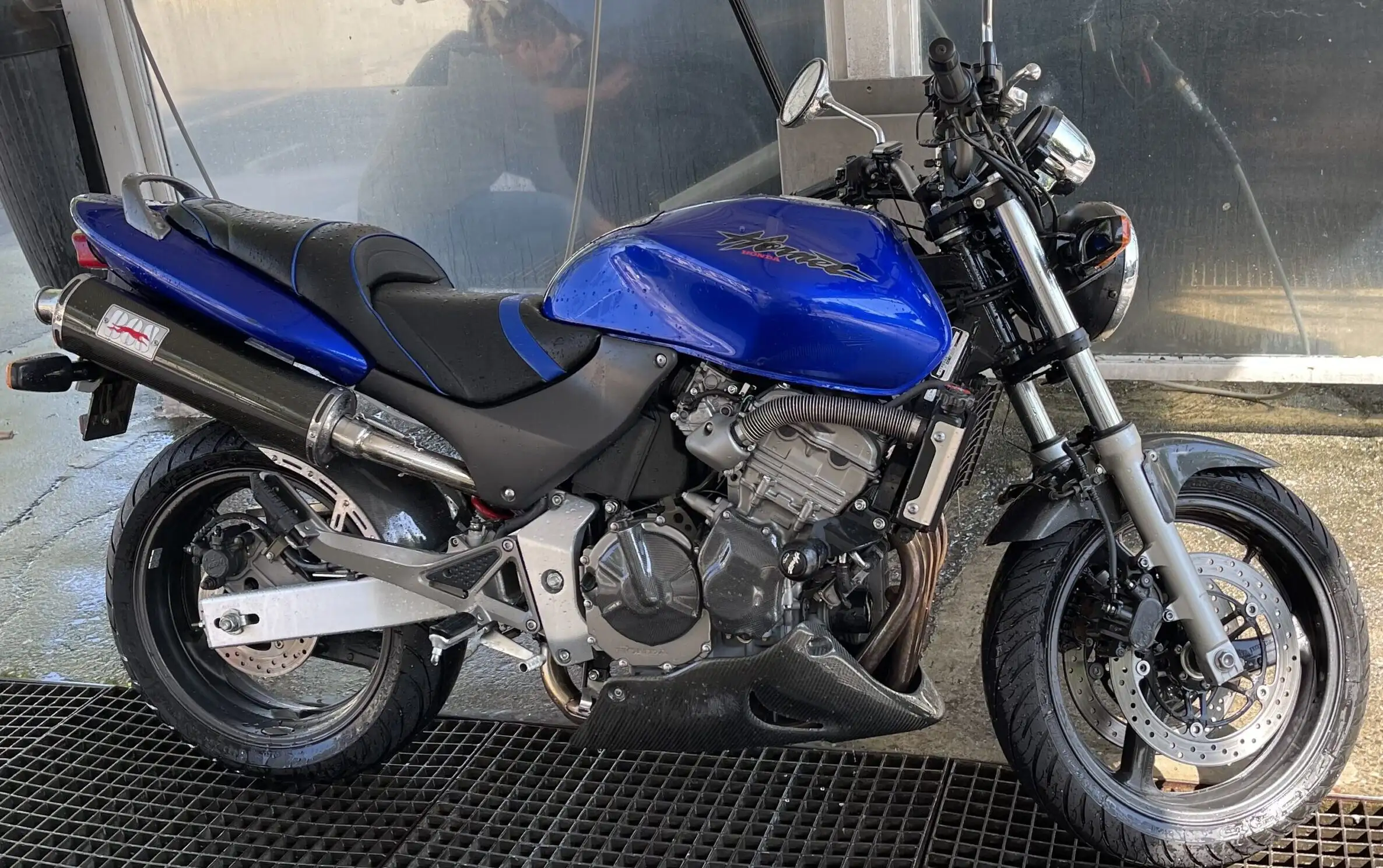
The Honda Hornet 600 (2001) is one of those bikes that has earned cult status thanks to its balance of reliability, performance, and style. Whether you’re a proud owner or just considering picking up one of these legends, here are tips and tricks to help you get the most out of your Hornet. The Honda Hornet 600 (2001) remains one of the best middleweight bikes of its era. With proper care and a few smart upgrades, it can still hold its own today as a fun, reliable, and stylish ride.
Tips and tricks
Keep an Eye on the Cam Chain Tensioner
One of the most common issues with the early Hornets is a noisy cam chain. Regularly check and replace the cam chain tensioner if it starts rattling—it’s cheaper than waiting for something more serious to fail.
Upgrade the Front Suspension
The stock forks can feel a little soft, especially if you ride aggressively. Consider progressive fork springs or a thicker fork oil for improved handling.
Rear Shock Refresh
At this age, the original rear shock may be tired. An aftermarket shock or even a refurbished stock one will massively improve ride comfort and cornering stability.
Check Carb Sync Regularly
The Hornet’s inline-four runs best when the carbs are perfectly balanced. Syncing them every few thousand miles keeps idle smooth and throttle response crisp.
Fit Braided Brake Lines
Rubber brake lines on older bikes can become spongy. Braided steel lines improve braking performance and feel.
Upgrade Brake Pads
Pair your braided lines with high-quality pads. EBC HH sintered pads are a popular choice for sharper stopping power.
LED Headlight Upgrade
The Hornet’s stock headlight isn’t the brightest. An LED bulb upgrade can give you much better night visibility without straining the electrical system.
Protect the Tank
The Hornet’s paint can scratch easily. A tank pad or clear protective film will keep it looking good for years.
Use Quality Tires
This bike responds really well to modern sport-touring tires. Consider brands like Michelin Road 6 or Bridgestone S22 for a mix of grip and longevity.
Chain Maintenance is Key
Clean and lube the chain every 300–500 miles. A neglected chain can eat through sprockets fast, and the Hornet’s torque will punish poor maintenance.
Bar-End Mirrors for Better Vision
The stock mirrors vibrate and give limited visibility. Bar-end mirrors not only improve visibility but also give a sleeker look.
Check the Regulator/Rectifier
Honda reg/recs are notorious weak points. If you notice dimming lights or weak charging, test it and replace before you get stranded.
Crash Protection
Frame sliders and bar protectors can save you a fortune in case of a low-speed drop.
Jet Kit for Smooth Power Delivery
If you’re running aftermarket exhausts or air filters, a jet kit will smooth out fueling and prevent lean running.
Exhaust Upgrade
The stock exhaust is quiet and restrictive. A slip-on can free up some power and give that inline-four a beautiful growl.
Lube Cables
Throttle and clutch cables dry out over time. A quick lube makes the controls smoother and reduces wear.
Watch the Fuel Tank for Rust
Being a 20+ year-old bike, condensation can cause rust inside the tank. Regularly check and consider a tank sealer if it becomes an issue.
Keep Cooling System Healthy
Flush the coolant every couple of years. Overheating can damage head gaskets, especially on an older bike.
Fit a Rear Hugger
The Hornet didn’t come with one stock, and the rear shock gets filthy. A hugger will protect it and extend its life.
Enjoy the Rev-Happy Engine
The Hornet’s inline-four is happiest when revved. Don’t be afraid to take it up into the higher RPMs—it was built for it, and that’s where the magic happens.
Dainese D-Air veste airbag ou gilet?
Le choix entre un gilet Dainese airbag et une veste Dainese airbag dépend de plusieurs facteurs, liés principalement à la modularité, au confort, et à l’utilisation souhaitée.
Le gilet est souvent préféré pour sa modularité, son confort et son prix, tandis que la veste offre une solution intégrée, mais moins flexible. Le choix dépend donc du style de conduite, des préférences personnelles en matière de confort et du budget.
Voici quelques raisons pour lesquelles certains motards pourraient préférer le gilet :
Modularité et compatibilité
Le gilet airbag est conçu pour être porté par-dessus ou en-dessous de n’importe quelle veste de moto. Cela permet au motard de continuer à utiliser ses vestes actuelles, qu’elles soient d’été ou d’hiver, tout en bénéficiant de la protection airbag. C’est une option plus polyvalente pour ceux qui souhaitent une protection supplémentaire sans avoir à investir dans une nouvelle veste.
Léger et discret
Le gilet airbag est généralement plus léger et plus discret que la veste. Il peut être facilement enfilé et retiré, ce qui le rend pratique pour ceux qui ne veulent pas toujours porter une veste avec protection intégrée, surtout pendant les trajets courts ou en ville.
Coût potentiellement inférieur
Le gilet peut être moins cher qu’une veste airbag complète, car il n’a pas besoin d’intégrer des caractéristiques supplémentaires comme l’étanchéité ou les renforts pour les coudes et épaules (qui sont souvent présents dans les vestes). Cela en fait une option intéressante pour ceux qui cherchent à économiser tout en bénéficiant de la sécurité accrue d’un airbag.
Polyvalence saisonnière
Le gilet peut être utilisé avec des vestes adaptées à différentes conditions climatiques, offrant plus de flexibilité. En été, il peut être porté sur une veste légère ou en dessous d’un blouson ventilé, tandis qu’en hiver, il peut être superposé à une veste plus épaisse.
Entretien et praticité
Le gilet étant indépendant de la veste, il est plus facile à entretenir ou à remplacer si besoin. En cas de déploiement, il n’est pas nécessaire de remplacer toute la veste, mais seulement le système d’airbag.
Confort et ajustement
Certains motards trouvent le gilet plus confortable car il peut s’ajuster facilement par-dessus différentes couches de vêtements, contrairement à une veste airbag qui a une coupe plus rigide et peut limiter les options de superposition.
En revanche, la veste airbag est une solution “tout-en-un”, idéale pour ceux qui recherchent une intégration complète de la protection sans avoir à superposer plusieurs couches. Elle est souvent plus pratique pour les longs trajets ou les motards qui veulent un équipement plus complet et intégré.
Your first motorcycle?
Choosing a first motorcycle should also depend on your individual needs, preferences, and level of riding experience. Be sure to take into account factors such as your riding goals, physical size and comfort, budget, and the availability of training courses in your area before making a decision. Additionally, always wear appropriate safety gear and consider enrolling in a motorcycle safety course to learn essential riding skills.
- User-Friendly Power: The Hornet typically has a manageable and user-friendly power delivery. Its engine, usually around 600cc, offers enough performance for beginners to grow into without being overly powerful or intimidating.
- Neutral Riding Position: The Hornet usually features an upright and neutral riding position, which is comfortable and provides good visibility. This position is less aggressive than that of some sportier motorcycles, making it suitable for new riders.
- Reliability: Honda has a reputation for building reliable motorcycles. This can be particularly reassuring for new riders who want a bike that won ’t break down frequently or require extensive maintenance.
- Lightweight and Maneuverable: The Hornet is typically lightweight and easy to maneuver, which can be beneficial for novice riders who are still developing their riding skills. It ’s easier to handle in city traffic and at low speeds.
- Versatile: The Hornet ’s design is versatile, making it suitable for a variety of riding styles, from commuting to weekend leisure rides. This versatility allows beginners to explore different aspects of motorcycling.
- Good Resale Value: Honda motorcycles, including the Hornet, often have good resale value. This can be advantageous for first-time riders who might want to upgrade to a different bike after gaining more experience.
- Available Safety Features: Depending on the model year and trim, some Hornet models may come equipped with safety features like ABS (Anti-lock Braking System), which can enhance braking performance and safety for new riders.
- Aftermarket Support: The Hornet has been a popular model, which means there is a substantial aftermarket for parts and accessories. This can be useful if you want to customize or maintain your bike.
- Cost-Efficient: While the exact price can vary depending on the model year and location, the Hornet is often competitively priced, making it accessible to many first-time buyers.
- Low Seat Height: Some versions of the Hornet have a relatively low seat height, which can be more accommodating for shorter riders or those who are less confident in balancing a tall motorcycle.
Protection gears
The quality and fit of your protective gear are crucial. Invest in gear that is designed for motorcycling and meets safety standards. Properly fitting gear ensures that it can provide the intended protection in case of an accident. Here ’s a list of recommended protections for motorcycle riders:
- Helmet: A DOT-approved full-face or modular helmet is the most important piece of protective gear. It protects your head and face from impact and debris, reducing the risk of traumatic brain injuries. Make sure the helmet fits snugly and is in good condition.
- Eye Protection: Motorcycle helmets often come with built-in face shields or visors to protect your eyes from wind, bugs, and debris. Alternatively, you can wear goggles or shatterproof glasses with UV protection.
- Jacket: A motorcycle-specific jacket made from abrasion-resistant materials like leather or textile is essential. It should provide protection for your arms, shoulders, and back. Look for jackets with built-in armor at impact-prone areas.
- Gloves: Riding gloves protect your hands from abrasions, weather, and impact injuries. They should cover your wrists and have reinforced padding in the palm and knuckle areas.
- Pants: Motorcycle pants or riding pants are designed to provide abrasion resistance and impact protection for your hips, knees, and thighs. Look for pants with armor at critical areas and consider options with built-in abrasion-resistant materials.
- Boots: Sturdy, over-the-ankle motorcycle boots with non-slip soles are essential. They protect your feet and ankles from impact and provide stability and support.
- Body Armor: If your jacket and pants do not have built-in armor, consider wearing separate body armor inserts, such as back protectors, chest protectors, and knee/shin guards.
- Rain Gear: Invest in waterproof rain gear to stay dry during inclement weather. Wet riding conditions can be hazardous.
- Reflective Gear: Use reflective vests, jackets, or strips to enhance your visibility to other road users, especially when riding in low-light conditions.
- Ear Protection: Repeated exposure to wind noise at high speeds can lead to hearing damage. Consider wearing earplugs designed for motorcyclists to reduce noise while still allowing you to hear essential sounds.
- Neck Protection: Some riders opt for neck braces or collars to protect against neck injuries in the event of a crash.
- Heat-Resistant Gear: In hot weather, wear gear designed for airflow and cooling. Mesh jackets and pants, as well as vented helmets, can help keep you comfortable while still providing protection.
What are the most common cause of accidents when riding a motorcycle?
Motorcycle accidents can result from various factors, but some of the most common causes include:
- Speeding: Riding at excessive speeds reduces reaction time and makes it harder to control the motorcycle. It ’s a significant factor in many accidents.
- Driver Inexperience: Inexperienced riders may lack the skills and knowledge needed to handle a motorcycle safely, especially in challenging situations.
- Impaired Riding: Riding under the influence of alcohol, drugs, or prescription medications can impair judgment and coordination, increasing the risk of accidents.
- Reckless Riding: Aggressive or reckless riding behaviors, such as weaving in and out of traffic, tailgating, or performing stunts, can lead to accidents.
- Distracted Riding: Using a phone, adjusting the radio, or engaging in other distractions while riding can divert attention from the road and lead to crashes.
- Poor Weather Conditions: Rain, snow, fog, and other adverse weather conditions reduce visibility and traction, making it more challenging to control a motorcycle.
- Road Hazards: Potholes, debris, gravel, and uneven road surfaces can be particularly hazardous to motorcyclists, who are more vulnerable to losing control.
- Vehicle Interactions: Many accidents occur when other vehicles fail to see or yield the right of way to motorcycles, often during left-hand turns or at intersections.
- Mechanical Failures: Motorcycle accidents can also result from mechanical issues, such as brake or tire failures, if regular maintenance is neglected.
- Running Red Lights and Stop Signs: Disobeying traffic signals and signs can lead to collisions with other vehicles.
- Lane Splitting: In areas where lane splitting (riding between lanes of slow-moving or stopped traffic) is not legal or safe, it can increase the risk of accidents.
- Lack of Protective Gear: Failing to wear appropriate protective gear, such as helmets, gloves, jackets, and pants, can lead to more severe injuries in the event of a crash.
- Fatigue: Riding while tired or drowsy can impair judgment and reaction times, making it more challenging to respond to changing road conditions.
To reduce the risk of accidents, motorcycle riders should prioritize safety, undergo proper training, follow traffic laws, wear protective gear, and exercise caution in various riding conditions. Additionally, other road users should be aware of motorcyclists and share the road responsibly to prevent accidents