Phoenix Drake SP
Introduction
Swiss Phoenix Drake Go from Optic to Irons in Two Minutes
Overcoming Fear of Firing a Pistol: Strategies for Building Confidence
Firing a pistol for the first time or even after several attempts can be an intimidating experience. It ’s perfectly normal to feel a sense of fear or apprehension when handling firearms. However, with the right mindset, preparation, and practice, you can gradually overcome this fear and build confidence in your shooting abilities. Here ’s a guide to help you navigate and conquer your fear of firing a pistol:
Education and Familiarity
One of the primary sources of fear is the unknown. Take the time to educate yourself about the pistol you ’ll be firing. Learn about its parts, safety features, and how it functions. Familiarizing yourself with the mechanics of the pistol can help demystify it and alleviate some of the fear.
Professional Guidance
Seek out professional instruction. Enroll in a reputable firearms training course or work with a certified instructor at a shooting range. A knowledgeable instructor can guide you through the process, provide step-by-step instructions, and offer reassurance. They ’ll prioritize safety and gradually expose you to the pistol ’s operation.
Start with Small Calibers
If possible, start with a pistol chambered in a smaller caliber. Smaller calibers tend to have less recoil and noise, making the experience less intimidating for beginners. As you become more comfortable, you can gradually progress to larger calibers.
Visualisation and Mental Preparation
Before you even step onto the shooting range, practice visualization. Imagine yourself confidently handling the pistol, taking aim, and firing accurately. Visualisation can help prepare your mind for the experience and reduce anxiety.
Controlled Breathing
Deep, controlled breathing can help calm your nerves. Practice deep breathing exercises before you start shooting. Inhale deeply, hold briefly, and then exhale slowly. This technique can help slow your heart rate and keep you more composed.
Gradual Exposure
Ease into the experience by taking small steps. Start by handling the unloaded pistol, getting comfortable with its weight and feel. Progress to practicing your grip and stance. Gradually work your way up to live firing. Each step should be taken at your own pace.
Focus on Technique
When you focus on proper technique, your mind becomes occupied with the process rather than fear. Concentrate on your grip, stance, sight alignment, and trigger control. As you become more absorbed in the technical aspects, fear tends to recede.
Positive Reinforcement
Celebrate your achievements, no matter how small. Positive reinforcement can help build confidence. If you achieve a good shot placement, acknowledge it. Over time, these small victories will accumulate, bolstering your confidence.
Desensitization
Repeated exposure can lead to desensitization. The more you practice firing the pistol, the more accustomed you become to the sensations and sounds. Gradually, the fear will diminish as familiarity grows.
Patience and Persistence
Overcoming fear takes time and persistence. Be patient with yourself and acknowledge that fear is a natural response. Embrace the challenge as an opportunity for personal growth, and don ’t be discouraged by setbacks.
it ’s okay to feel fear, especially when dealing with potentially dangerous tools like firearms. Your safety and comfort are paramount. Taking a gradual and proactive approach, along with seeking professional guidance, will help you overcome fear and become a more confident and responsible pistol shooter.
Mastering Pistol Firing Techniques: A Comprehensive Guide
Firing a pistol is a skill that demands precision, discipline, and constant practice. Whether you’re a novice looking to learn the basics or an experienced shooter striving to enhance your accuracy, mastering pistol firing techniques is crucial for safety and success. In this guide, we’ll take you through the key steps and principles to help you fire a pistol properly.
Introduction
Firing a pistol is a skill that demands precision, discipline, and constant practice. Whether you’re a novice looking to learn the basics or an experienced shooter striving to enhance your accuracy, mastering pistol firing techniques is crucial for safety and success. In this guide, we’ll take you through the key steps and principles to help you fire a pistol properly.
Safety First
Before delving into firing techniques, it’s paramount to prioritize safety. Always treat every firearm as if it’s loaded, and never point it at anything you’re not willing to destroy. Familiarize yourself with the pistol’s safety mechanisms and ensure that the muzzle is pointed in a safe direction at all times.
Grip and Stance
A solid grip and proper stance are the foundation of accurate pistol firing. Follow these steps:
- Grip: Hold the pistol with your dominant hand, ensuring a high and firm grasp on the handle. The web of your hand should be as high as possible on the backstrap, allowing for better recoil control. Your non-dominant hand should wrap around your dominant hand’s fingers, creating a secure two-handed grip.
- Stance: Your feet should be shoulder-width apart, forming a stable base. Distribute your weight evenly between both legs, with a slight bend in your knees. Stand at a slight angle to the target, which helps reduce your profile and manage recoil.
Your dominant hand is the hand that you’re more likely to use when you’re doing fine motor tasks like writing, brushing your teeth, or catching a ball.
Sight Alignment and Picture
Find your dominant eye, your dominant eye is the eye your brain prefers for processing sight information.
Select an item located approximately 7 meters away and roughly the size of a doorknob or a light switch. Raise both of your hands, creating a triangular frame that encloses the chosen object. While keeping both eyes open, stretch your arms outward, ensuring that the object remains centered within the triangular frame. Following this, close one eye at a time while maintaining the position of the triangular frame without any movement. Begin by closing your left eye and observing your field of vision. Then, open your left eye and proceed to close your right eye, making note of your visual experience. Whichever open eye allows you to see the object neatly framed within your hands indicates the eye your brain has the most confidence in. This open eye is your dominant one.
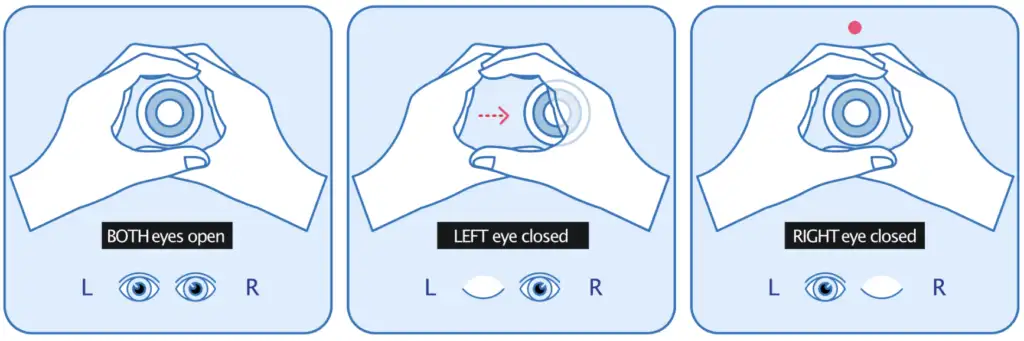
How to determine if you’re left eye dominant
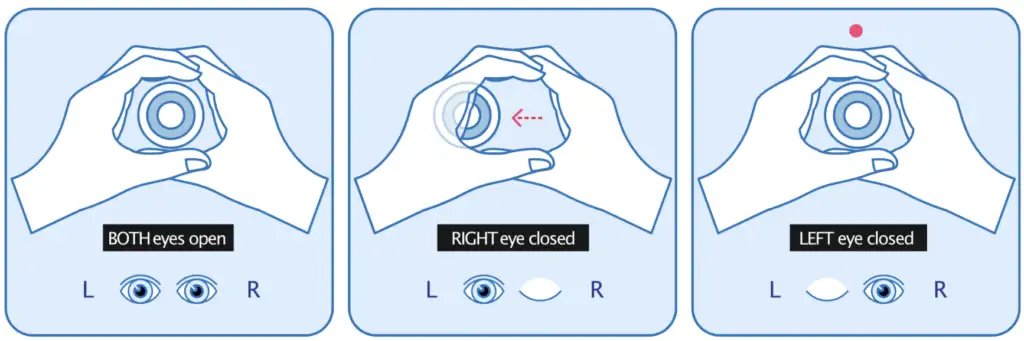
How to determine if you’re right eye dominant
Achieving accurate shots heavily relies on proper sight alignment and sight picture:
- Sight Alignment: The front and rear sights should be aligned perfectly. The front sight post should be centered within the rear sight notch, and the tops of both sights should be at the same height.
- Sight Picture: When you align your sights on the target, focus on the front sight. The target and rear sight should appear slightly blurry. This ensures your focus is on the front sight, which is crucial for accuracy.
Trigger Control
Mastering trigger control is essential for accurate firing:
- Trigger Finger Placement: Place the pad of your trigger finger (the part between the fingertip and the first joint) on the trigger. Avoid using the joint, as it can lead to lateral movement when pulling the trigger.
- Smooth Squeeze: Apply gradual, steady pressure on the trigger. The motion should be smooth and controlled, without disturbing the sight alignment.
Breathing and Follow-Through
Managing your breath and maintaining proper follow-through contribute to consistent accuracy:
- Breathing: While aiming, take a deep breath, let it out partially, and hold your breath momentarily. This reduces the movement of your chest, aiding in steadier aim.
- Follow-Through: After the shot breaks, maintain your sight picture and keep your focus on the front sight for a moment. This helps prevent flinching and allows you to see any sight misalignment.
Recoil Management
Controlling recoil is essential for quick follow-up shots:
- Grip Pressure: Maintain a firm grip, but don’t grip so tightly that your hand fatigues quickly. Allow the pistol to move within your grip slightly to absorb some of the recoil.
Practice Regularly
Becoming proficient with a pistol requires consistent practice. Regularly visit a shooting range to refine your skills and reinforce proper techniques. Dry firing (practicing without live ammunition) can also be invaluable for honing your trigger control and sight alignment.
Conclusion
Firing a pistol properly is a blend of art and science. By mastering the fundamental techniques outlined in this guide, you can significantly enhance your accuracy and overall shooting skills. Remember, safety should always be your top priority. Whether you’re a beginner or an experienced shooter, continuous learning and practice will pave the way to becoming a more skilled and responsible pistol handler.